



2. The Challenge
2. The Challenge
The primary design challenge was emotional authenticity. How do you design an AI interface that feels spiritually respectful and "human" enough to simulate a conversation with a historical figure without it feeling gimmicky or overly robotic?
3. Core Features & Innovation
3. Core Features & Innovation
Unlike standard Bible apps, this project focused on two "star" features:
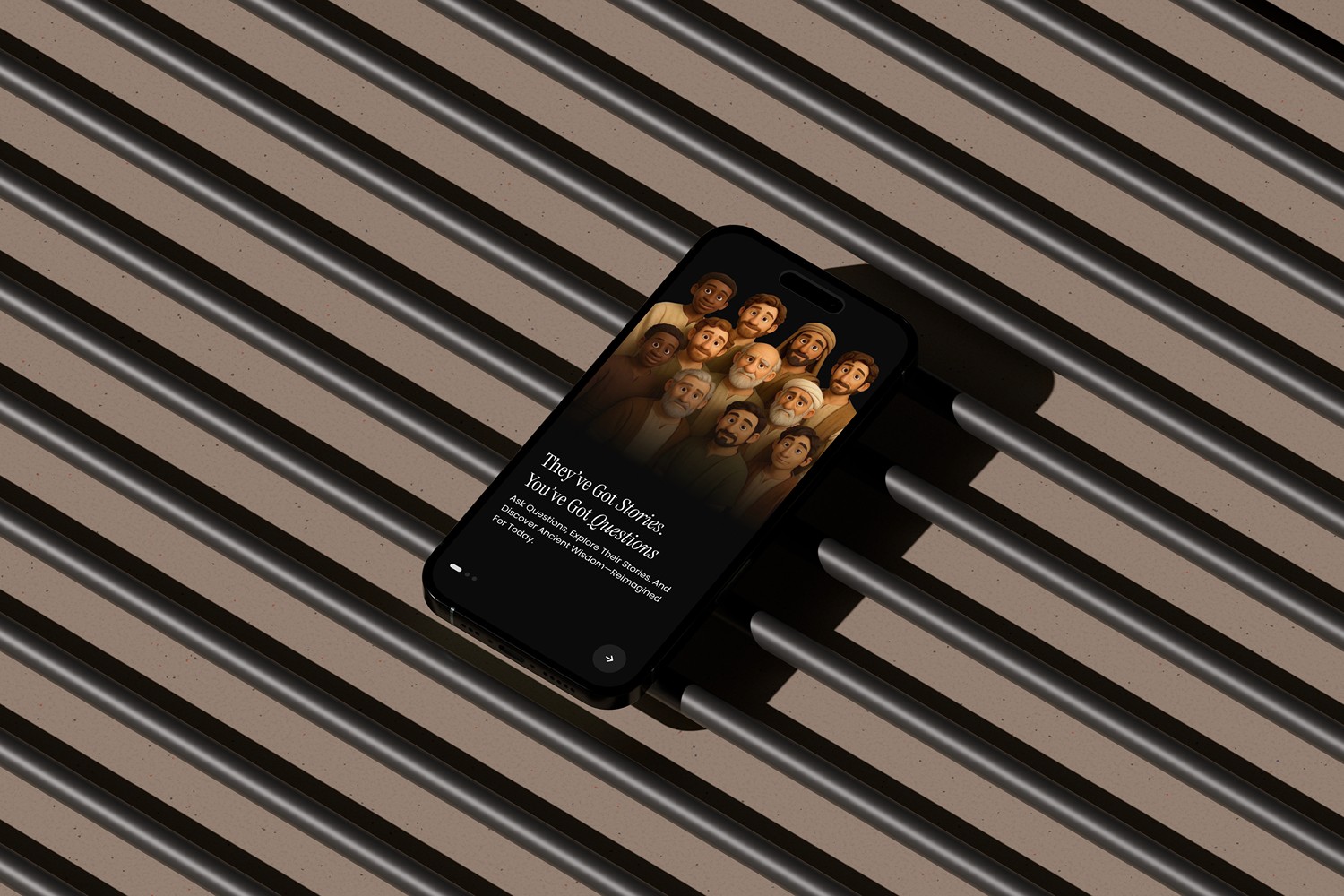
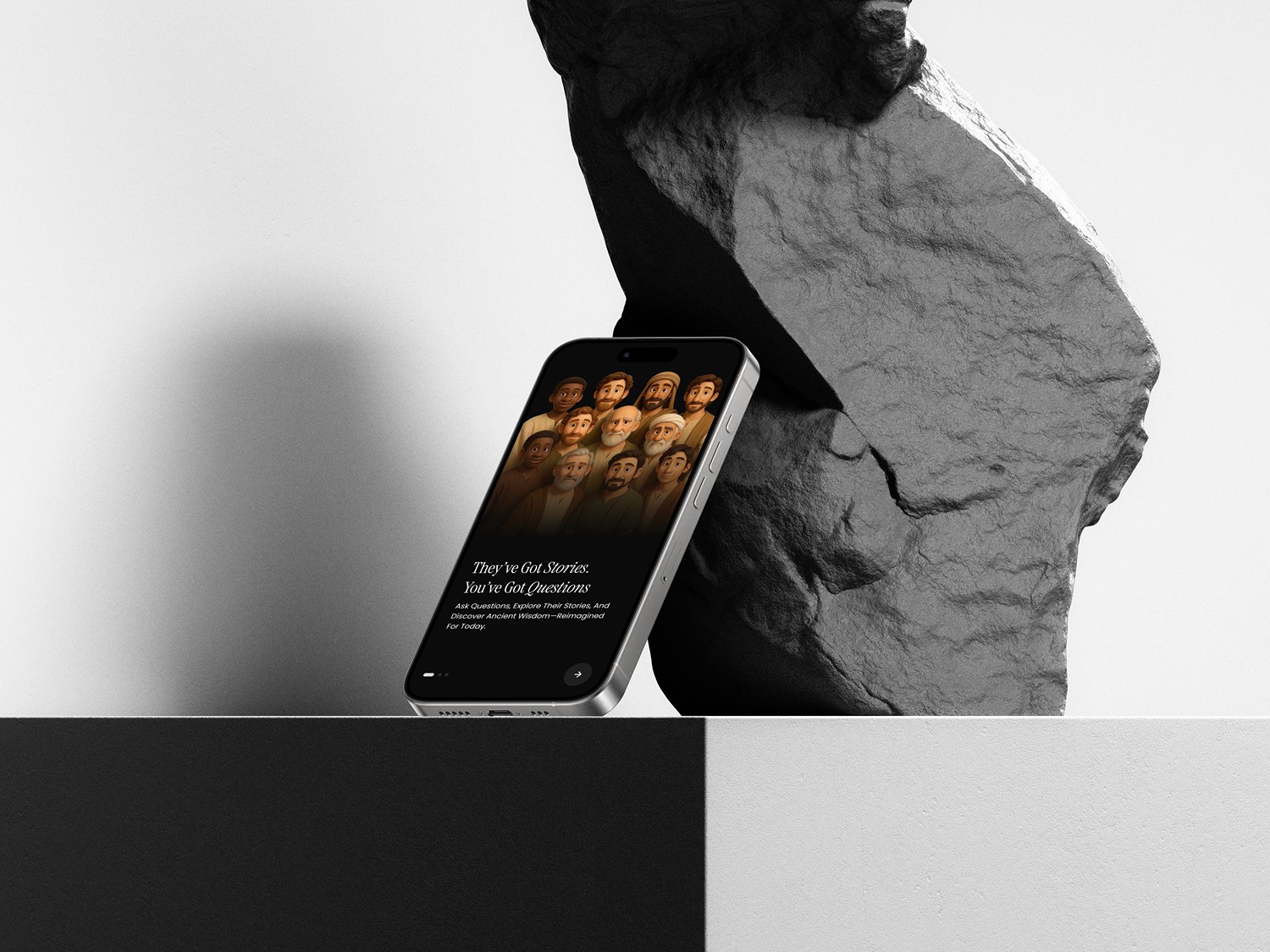
AI Character Personas: Users can select specific biblical characters (e.g., Peter, Paul, or Mary Magdalene) to ask questions. The AI is tuned to each character's historical context and scriptural journey.
AI Voice Calls: To enhance accessibility and emotional connection, users can initiate a voice call with these characters. This allows for hands-free reflection during commutes or prayer time, making the experience feel like a genuine mentorship.
4. The Design Solution
4. The Design Solution
Immersive Dialogue Flows: Designed conversational patterns that feel less like a "search engine" and more like a counseling session.
Clean, Reflection-First UI: To balance the high-tech AI backend, the visual interface was kept intentionally minimalist to ensure the technology didn't distract from the spiritual purpose.
Voice UI (VUI): Careful consideration was given to the voice interface, ensuring visual feedback (like subtle animations) during calls to maintain engagement without being visually overwhelming.
5. Key Outcomes
5. Key Outcomes
Relatability: Transformed static text into a living narrative, making the Bible feel more accessible to younger, tech-savvy audiences.
Accessibility: The voice call feature opened the app to users with visual impairments or those who prefer auditory learning.
Engagement: By personifying the Disciples, the app increased user retention through deep, personalized storytelling.
